


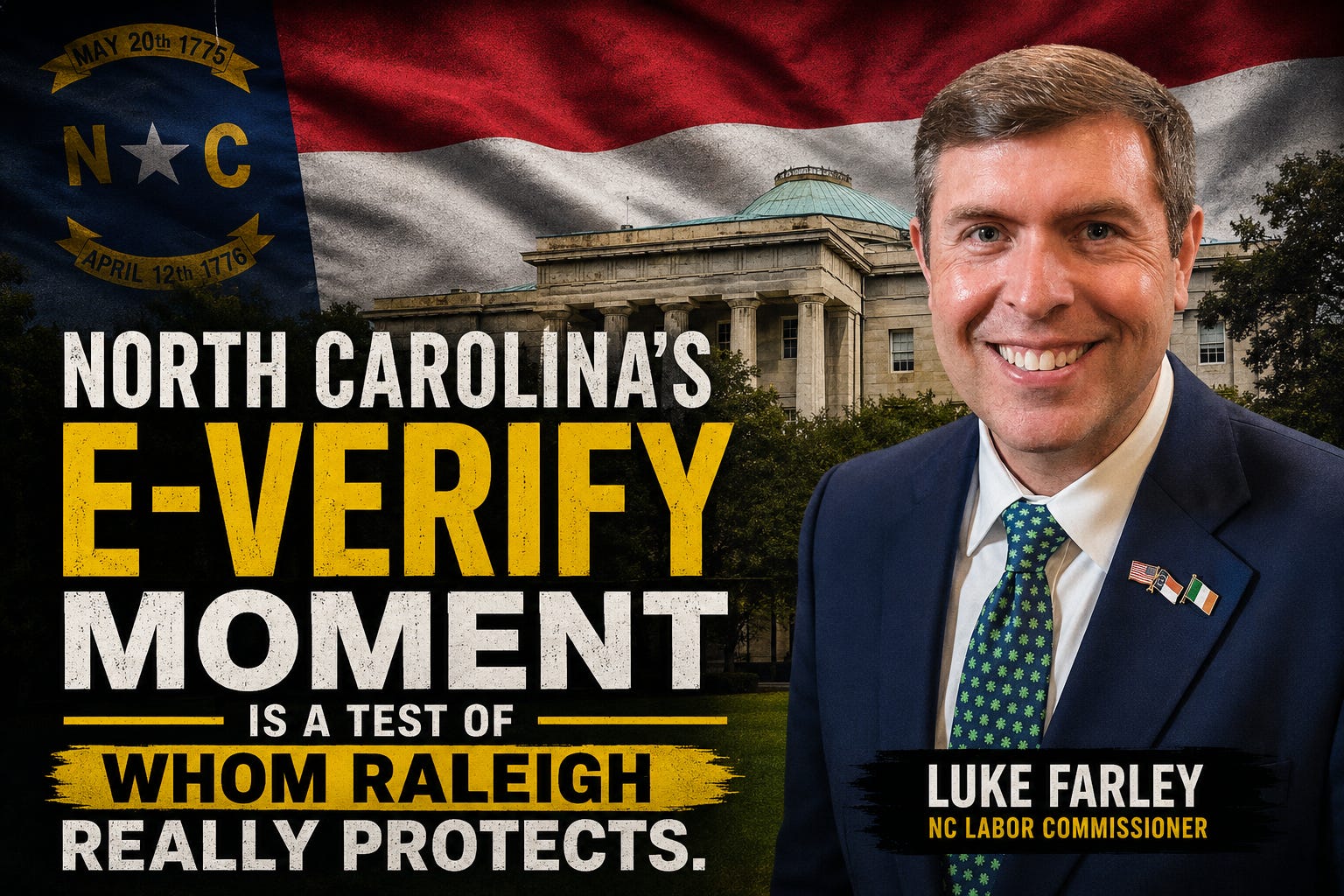
North Carolina Republicans are trying to answer a simple question: if the state is going to brag about jobs, growth, and business climate, are those jobs actually reserved for people legally allowed to work here?
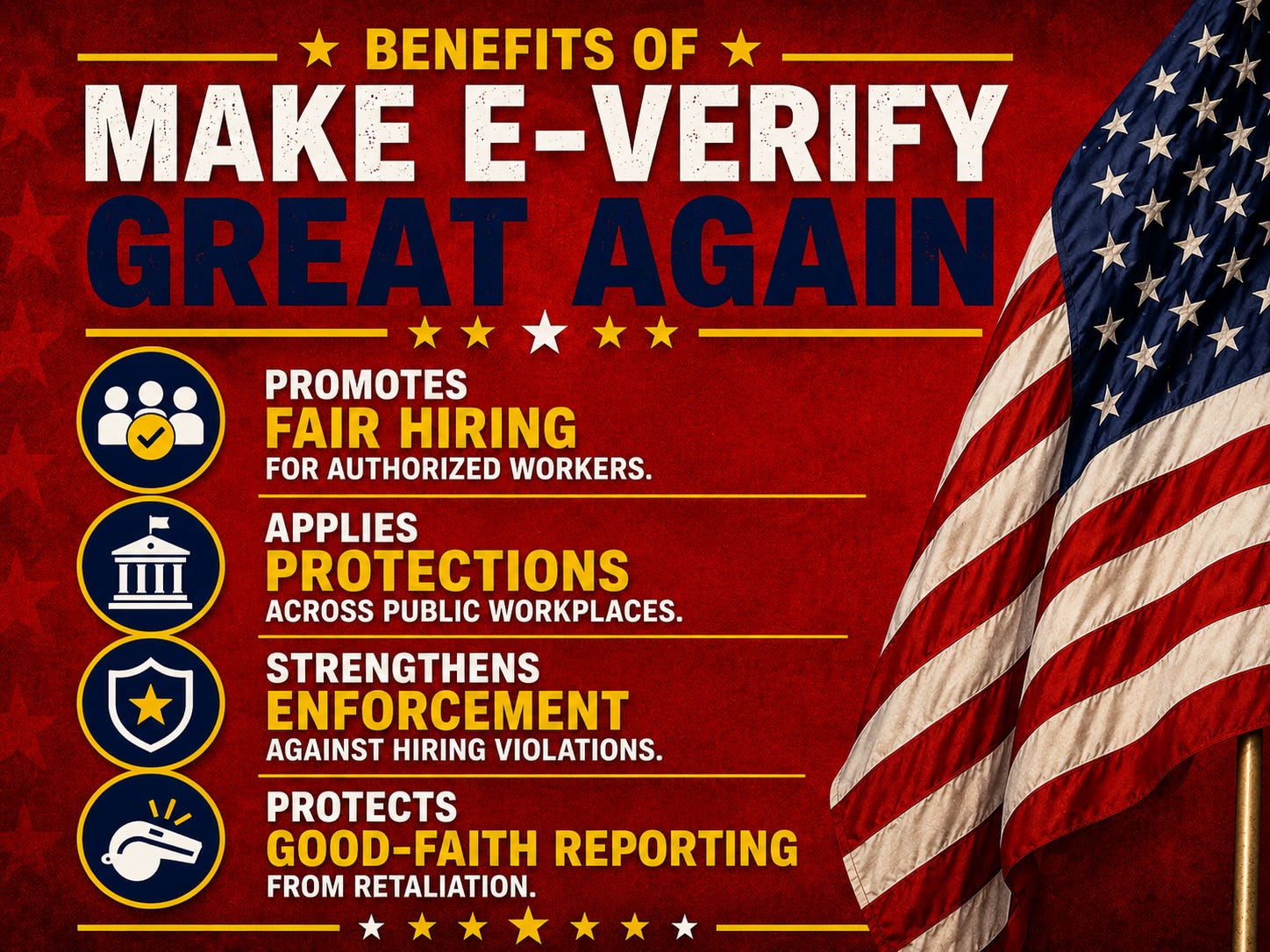
That is the premise behind House Bill 1214, filed under the wonderfully unsubtle title Make E-Verify Great Again. The bill, backed by House Republicans including Reps. Karl Gillespie, Neal Jackson, Ben Moss, and Carson Smith, would expand North Carolina’s E-Verify requirements, give Labor Commissioner Luke Farley authority to conduct random and risk-based compliance checks, raise penalties for violations, create a good-faith safe harbor for employers fooled by fraudulent documents, and protect workers who report suspected violations.
Farley came onto the NC Political Tea podcast last night to make the case. The timing matters.
When he appeared on the show last August, he admitted the state’s enforcement model had a glaring weakness: the Department of Labor could not proactively go looking for employers who were ignoring the law. It had to wait for an internal complaint. WATCH:
This time, Farley said he had promised to change that.
“We have a very passive system right now,” he said. “This will allow us to be active in how we address these concerns.”
That is the heart of the bill.
Current North Carolina law generally applies E-Verify to employers with 25 or more employees. HB 1214 would lower that threshold to five, bringing far more employers under the law.
It also adds state agencies, counties, municipalities, and other government entities into the compliance structure, and it would require employers to preserve verification records while a worker is employed and for one year afterward.
For small-business conservatives, the most important part may not be the crackdown. It may be the safe harbor.
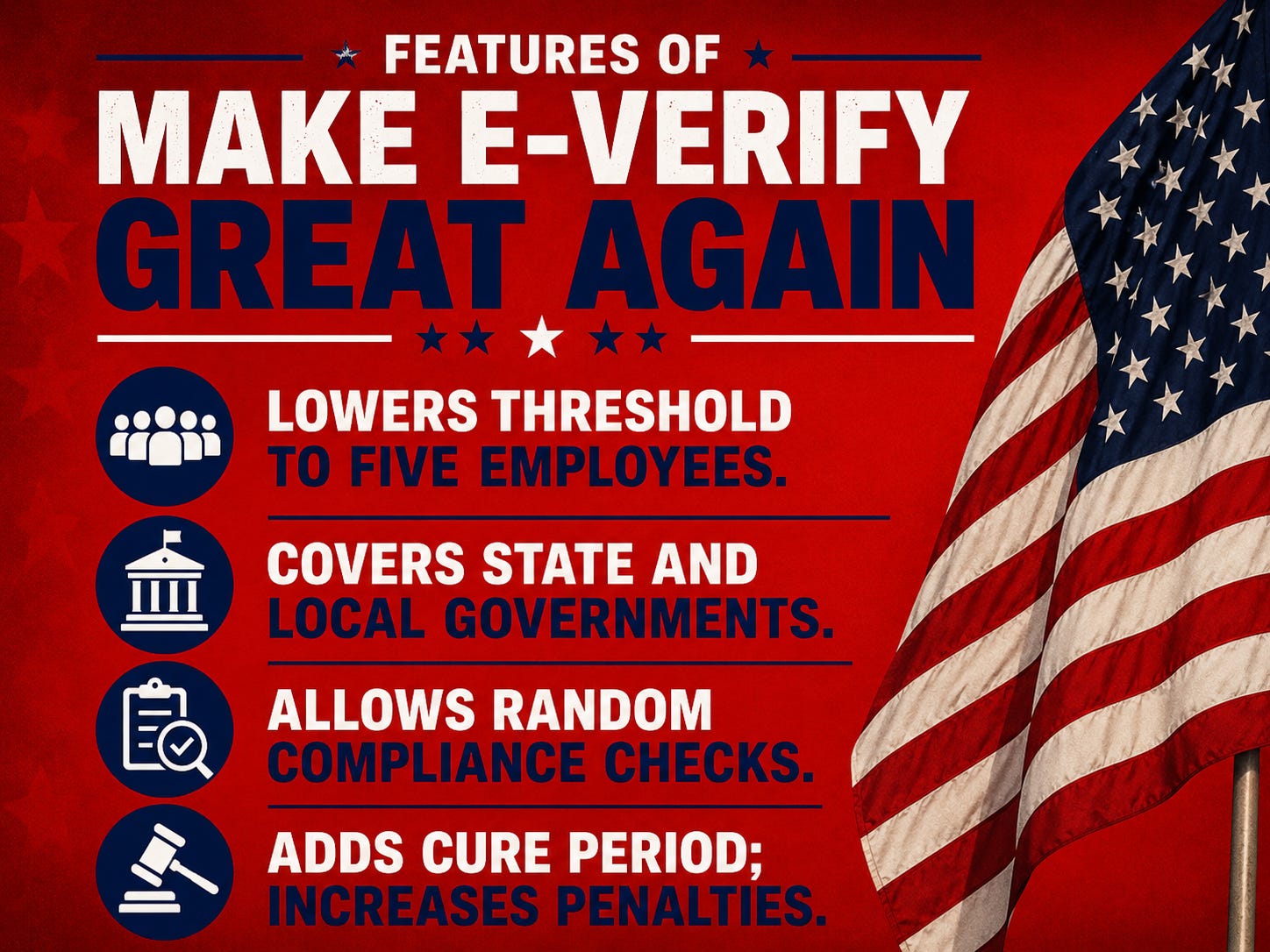
The bill says employers acting in good faith — enrolling in E-Verify, using it, keeping required records, and not knowingly accepting fraudulent documents — should not be punished simply because an employee submitted fake information the employer could not reasonably detect.
That distinction matters. A serious enforcement policy should not treat the patriotic plumber, roofer, restaurateur, or machine-shop owner the same way it treats a competitor who deliberately builds a payroll around illegal labor.
Farley made that point directly on the podcast. He said business owners who follow the law have told him they are being undercut by competitors who do not.
“I’m a patriot. I have created jobs. I want to create jobs for Americans. And I use E-Verify,” Farley recalled one plumbing company owner telling him. “I have competitors, though, who don’t use E-Verify. And those people can undercut me on price and undercut me on bids because they do things the wrong way.”
That is the pro-small-business argument for enforcement. This is not merely an immigration bill dressed up as labor policy. It is a market-integrity bill.
A business that obeys the law, pays legal workers, keeps records, and absorbs compliance costs should not lose bids to an operator whose “competitive advantage” is looking the other way.
Farley framed the bill the same way.
“The why of this bill, the reason I’m behind it is the North Carolina worker,” he said. “Those jobs need to go to hardworking North Carolinians.”
The national backdrop is impossible to ignore.
Pew Research Center estimated that the unauthorized immigrant population in the United States reached a record 14 million in 2023, after what it described as two consecutive years of record growth.
During the Biden years, many Americans watched the border crisis and concluded that Washington had lost control not only of entry into the country, but of the labor market inside it.
A state that protects only the worker but not the employer will overregulate. A state that protects only the employer but not the worker will invite exploitation.
That anxiety was not confined to construction sites or farms.
Americans increasingly worried about illegal labor, visa abuse, identity fraud, and loose verification standards reaching into better-paying sectors — technology, engineering, health care, logistics, and skilled trades.
Some of those concerns are easier to prove than others. But the political reality is clear: voters who tolerate high levels of legal immigration when the border is controlled become far less generous when they believe government has stopped enforcing the rules.
That helps explain why immigration opinion has shifted since Trump returned to office.
A Gallup survey reported by PBS NewsHour found that the share of Americans wanting immigration decreased dropped from 55% to 30%, while Republicans became more satisfied with current immigration levels after Trump took office.
The lesson is not that Americans suddenly stopped caring about immigration. It is that Americans can distinguish between lawful immigration and lawless labor markets.
The policy question in Raleigh is whether North Carolina wants to remain half-serious or become serious.
E-Verify is one of the few tools states can use in that fight.
DHS describes E-Verify as a web-based system that allows enrolled employers to confirm employees’ eligibility to work in the United States. The federal E-Verify site now advertises E-Verify+ as a more streamlined system built around “innovation, protection, convenience, transparency, and efficiency.”
In other words, the old excuse that compliance is too mysterious or burdensome is getting weaker.
North Carolina is not alone.
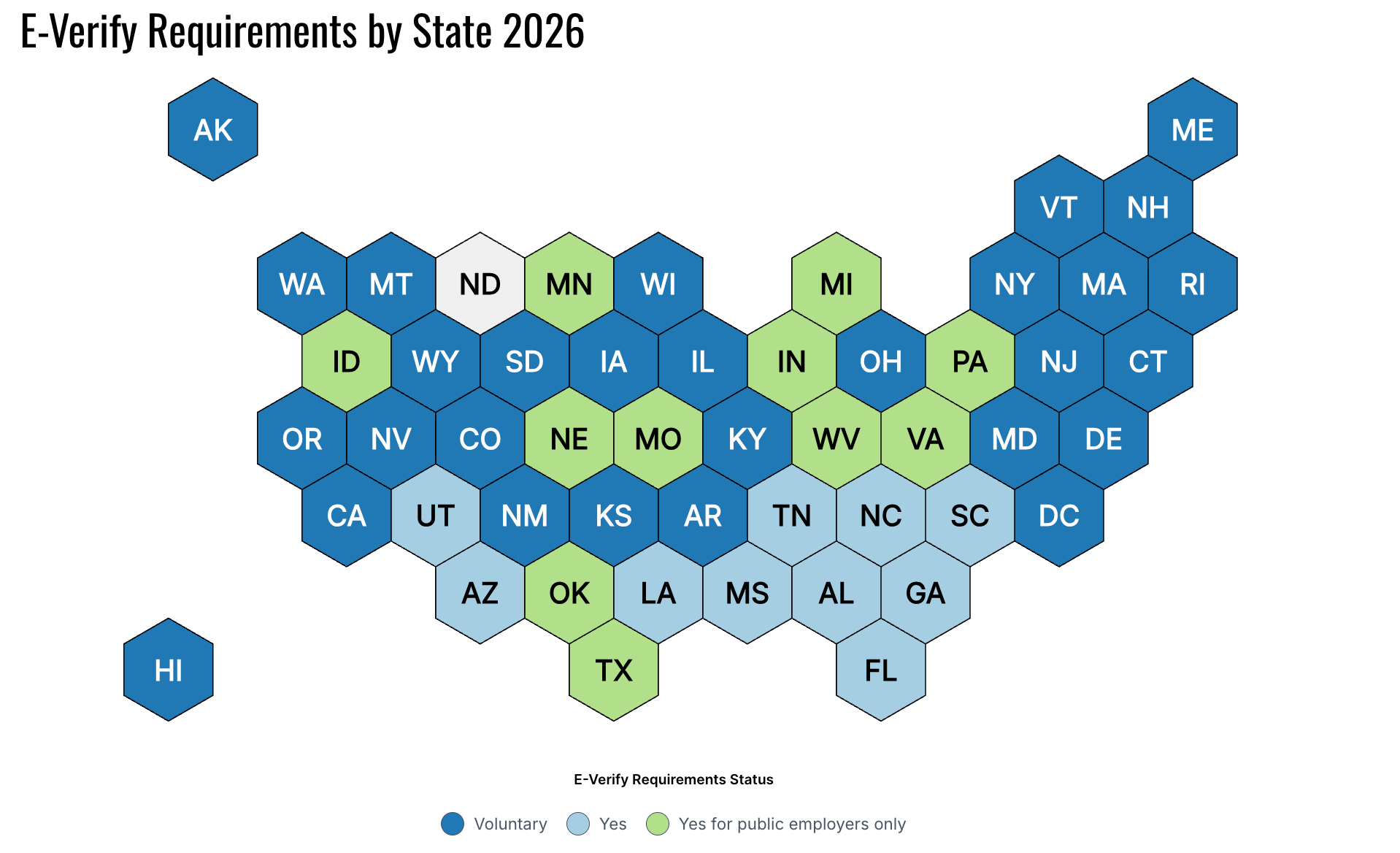
Multiple states already require E-Verify for many or most private employers, including Alabama, Arizona, Florida, Georgia, Mississippi, South Carolina, Tennessee, and Utah.
The policy question in Raleigh is whether North Carolina wants to remain half-serious or become serious.
The stakes are rising because the state’s economy is changing.
NC TECH’s 2026 State of Technology Industry Report says North Carolina’s technology industry employed 328,414 people in 2024, or 6.7% of statewide employment, while accounting for 12.1% of wages.
That is the definition of a high-value labor market: fewer workers than some traditional sectors, but a much larger share of the paycheck economy.
Health care is under pressure, too.
The North Carolina Healthcare Association’s workforce assessment says state hospitals have increased employment faster than the national average and neighboring Southeastern states over the past decade, while nursing and residential care facilities lost more than 15,000 positions in recent years.
North Carolina is aging, growing, and trying to fill skilled jobs faster than its institutions can comfortably supply workers.
That is exactly when labor rules matter most.
The danger for Republicans is that enforcement becomes performative: loud enough for a press release, too timid to change employer behavior. HB 1214 is designed to avoid that trap.
Complaint-based enforcement assumes someone inside a business is willing to risk retaliation. Random and risk-based checks assume the state has a responsibility to verify compliance before the honest employer gets punished by the dishonest one.
For supporters of the bill, the argument is blunt: North Carolina cannot build a pro-worker, pro-business economy on selective law enforcement. Legal immigrants should not be smeared by illegal hiring schemes.
American workers should not be displaced by fraud. Small businesses that follow the rules should not be treated like suckers.
A state that protects only the worker but not the employer will overregulate. A state that protects only the employer but not the worker will invite exploitation.
HB 1214’s political promise is that North Carolina can protect both — by making E-Verify predictable, enforceable, and fair.
That is the real test.
Not whether Raleigh can say “E-Verify” in a campaign mailer.
Whether it can make the word mean something.
WATCH Commissioner Luke Farley’s full interview:
If we had this mandatory at a national level, our ~30 million illegal alien problem would melt away, because these people would be ineligible to work. It is telling that our "conservative" Congress still won't consider such a bill.